
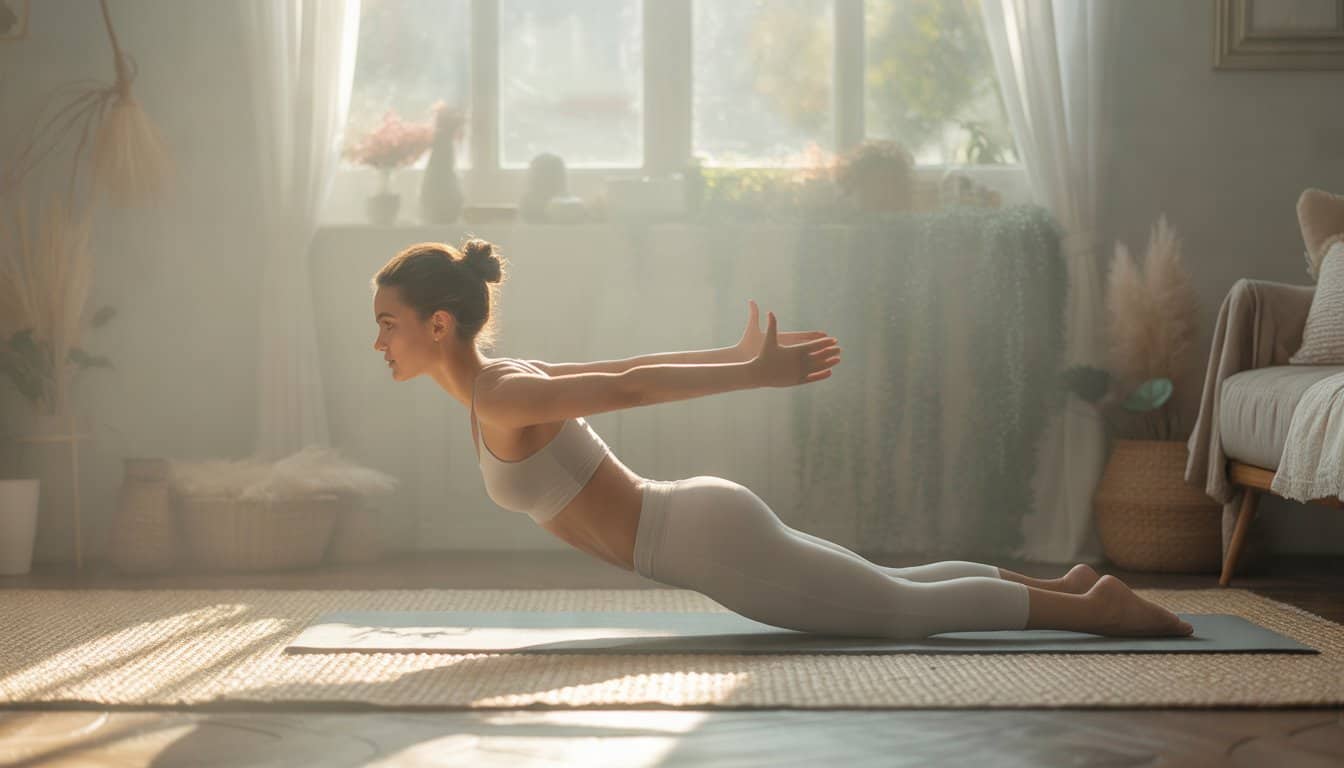
What Mat Pilates Is and Why It Solves Common Fitness Problems
Mat Pilates is a low-impact exercise method performed on the floor using your body weight, breath, and controlled movements to build strength, stability, and mobility. If you want a workout that improves posture, helps you move with more control, and does not require expensive equipment, mat pilates is a practical solution. It is especially helpful when you feel stiff from sitting too long, weak in the core, or disconnected from how your body moves.
Unlike workouts that focus mainly on intensity, mat Pilates asks you to move with precision. That makes it suitable if you want to exercise safely while still challenging your muscles. According to the American Council on Exercise, Pilates-based training can improve core endurance and flexibility when practised consistently, which explains why many people use it as a long-term movement routine rather than a quick fix (American Council on Exercise).
How Mat Pilates Works in Your Body
Mat Pilates works by training the deep stabilising muscles that support your spine, pelvis, and shoulders. Instead of relying on momentum, you use slow, controlled repetitions that force your body to stay aligned. This means you are not just “doing exercises”; you are teaching your muscles to cooperate better in everyday movement.
When you practise mat Pilates regularly, you may notice better balance, improved body awareness, and less unnecessary tension in the neck, lower back, and hips. The method also encourages coordinated breathing, which helps you maintain control during challenging movements. Research published in Sports Medicine has noted Pilates’ positive effects on core strength, balance, and functional movement, especially when included in a structured exercise programme (Sports Medicine).
Key Benefits You Can Expect from Mat Pilates
The appeal of mat Pilates is that it solves several common fitness frustrations at once. If you feel like your workouts are either too hard on the joints or too easy to be meaningful, mat Pilates sits in the middle. It gives you a structured challenge without high impact, making it a strong option for beginners and experienced exercisers alike.
One major benefit is improved core strength, but the results go beyond abdominal muscles. You also train the glutes, back, shoulders, and hips in a balanced way. Over time, this can support better posture, smoother movement, and more confidence in daily activities such as bending, lifting, standing for long periods, and walking. The NHS also recognises that regular physical activity and strengthening work can support mobility and overall musculoskeletal health (NHS Exercise Guidance).
Common Problems Mat Pilates Can Help Fix
Many people turn to mat Pilates because they have specific problems that traditional gym routines do not solve well. If you are dealing with a weak core, poor posture, tight hips, or recurring lower back discomfort from inactivity, mat Pilates may help you build better movement habits. It is not a medical treatment, but it can be a useful part of a broader fitness routine.
Another common issue is inconsistency. Some workouts feel intimidating, complicated, or too time-consuming to maintain. Mat Pilates can be done in a small space with minimal equipment, which makes it easier to stick with. If your main challenge is not knowing where to start, this method gives you a clear structure: learn alignment, control, breathing, and progressive difficulty. That simplicity is often what makes the routine sustainable.
How to Start Mat Pilates Safely and Effectively
If you are new to mat Pilates, the best way to begin is to focus on basic movement quality instead of trying advanced sequences too soon. Start with a short session, learn the main breathing pattern, and keep your attention on neutral alignment. You do not need to force a big range of motion; the goal is control, not speed.
It also helps to practise on a supportive mat and wear comfortable clothing that allows you to move freely. If you have existing pain, are recovering from an injury, or are pregnant, it is wise to seek guidance from a qualified instructor or healthcare professional before starting. In general, a beginner-friendly approach allows you to build confidence while reducing the chance of strain.
Essential Mat Pilates Moves to Learn First
To get real results from mat Pilates, you need to learn a small group of foundational exercises before moving on to more complex patterns. These basics teach you how to stabilise your trunk, move your limbs with control, and keep your breath steady throughout the workout. Once these movements feel natural, you can progress more safely.
The Hundred
The Hundred is a classic Pilates movement that challenges your core endurance while encouraging rhythmic breathing. You lie on your back, lift the head and shoulders slightly, and pump your arms as you breathe in and out in a controlled pattern. It is effective because it builds abdominal engagement without requiring sudden movement.
Roll-Up
The Roll-Up helps improve spinal articulation and core control. You move from lying down to sitting up slowly, segment by segment, rather than using momentum. If you often feel stiff through the spine or struggle with controlled abdominal work, this exercise is a useful foundation.
Single-Leg Stretch
Single-Leg Stretch trains coordination, abdominal strength, and pelvic stability. As one leg extends and the other bends in, you learn to maintain a steady torso while the limbs move. This makes it a strong exercise for improving control during everyday motion.
Glute Bridge
Glute Bridge is valuable if you sit for long hours and want to wake up your posterior chain. It strengthens the glutes and supports pelvic stability, which can help reduce the feeling of being “locked up” through the hips and lower back. In mat Pilates, even simple bridging is done with careful alignment and breath.
How to Build a Mat Pilates Routine That Lasts
The best mat Pilates routine is the one you can actually maintain. If your schedule is busy, start with two to three short sessions a week instead of planning an unrealistic daily practice. A consistent 20 to 30 minutes can be more effective than a long session you rarely repeat. Over time, you can increase the difficulty by adding more repetitions, longer holds, or more advanced variations. Related source: la-pilatesstudio.com.
To make the routine sustainable, combine mat Pilates with a realistic goal, such as improving posture, easing stiffness, or building core control for other sports or activities. Track your progress by noticing how your body feels, not just how hard the session was. When you can move with better control, less strain, and greater confidence, you are already getting the main benefits of the practice.